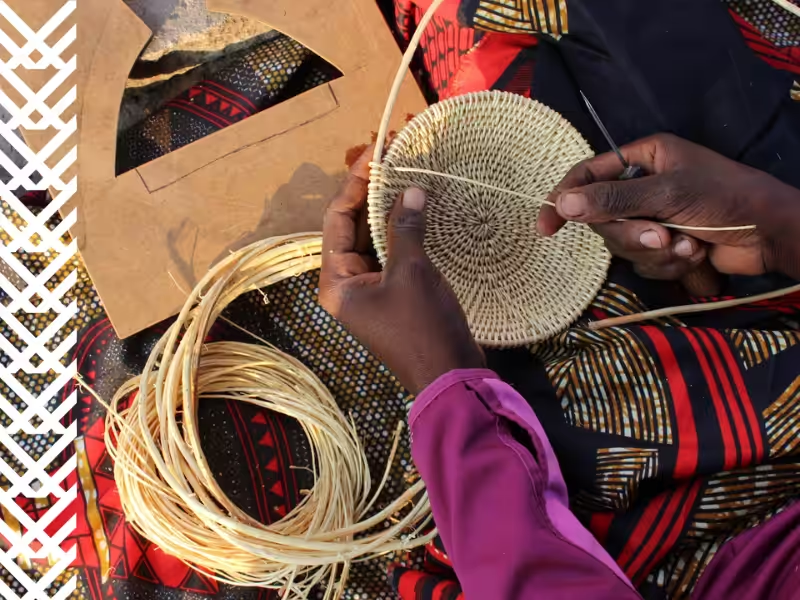
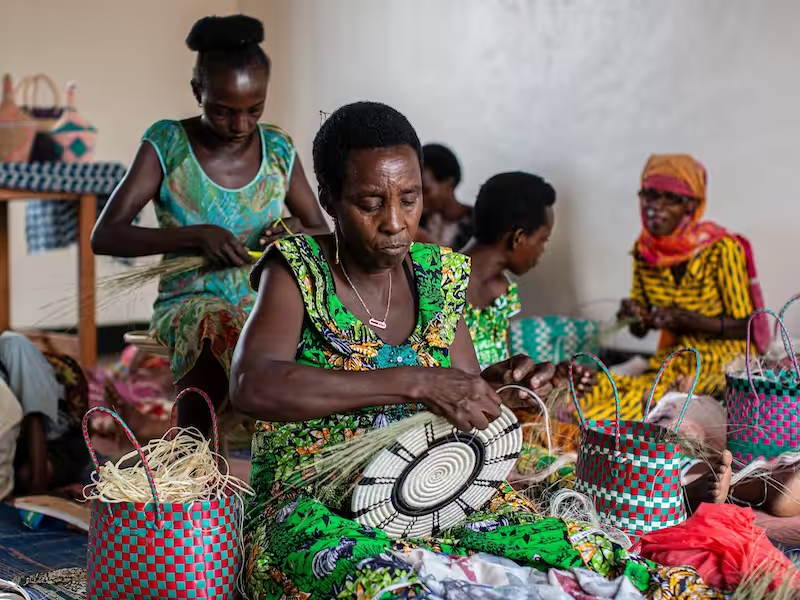
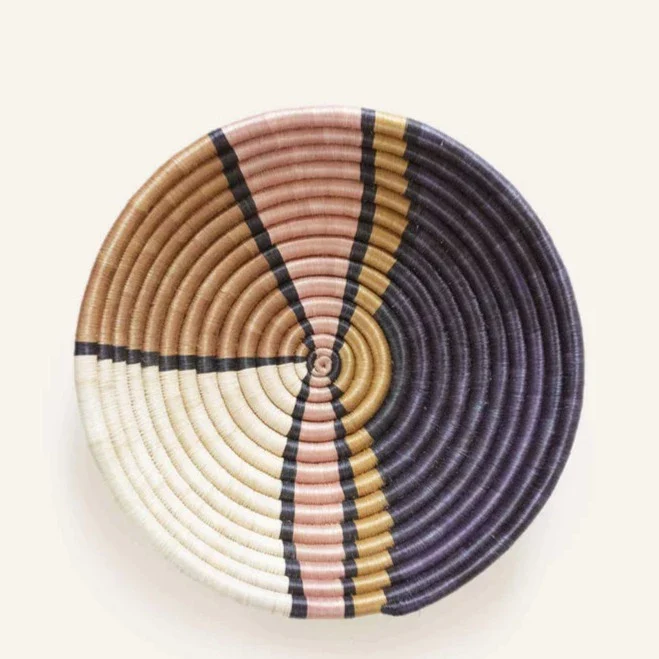
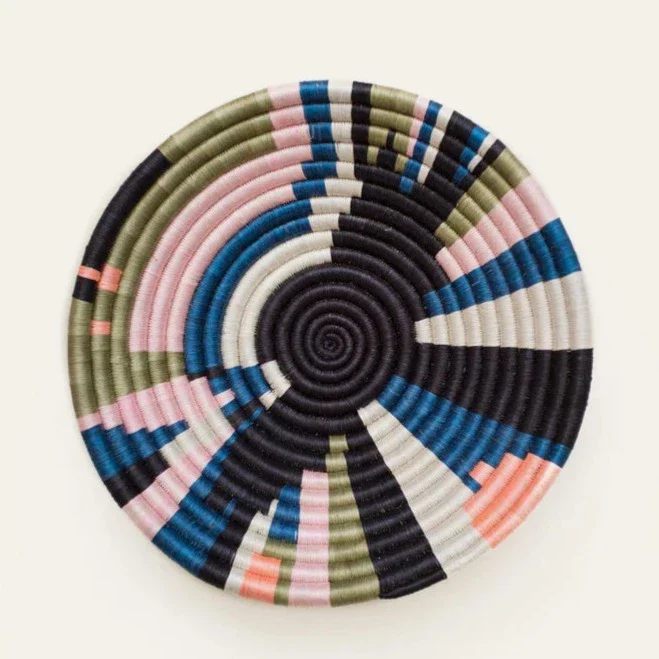
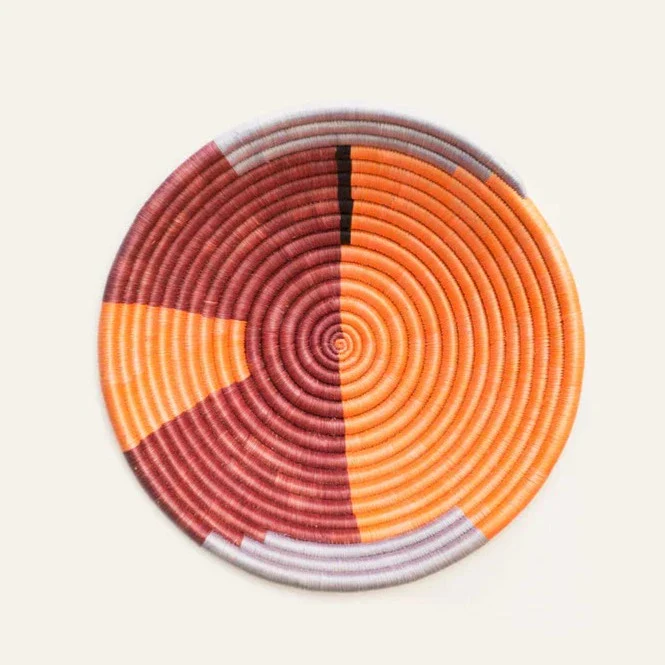
Basketry is one of the oldest art forms in East Africa and remains an essential part of daily life. Traditionally, weaving is a communal activity, with skills passed down through generations from mothers to daughters. In Burundian and Congolese cultures, intricately woven baskets are used for storing and carrying goods for household and market use. Weaving often takes place during the agricultural off-season – the period between planting and harvesting – when labour demands on farms are lower. This allows artisans to supplement their income while waiting for crops to grow. Baskets are also given as gifts for significant life events, such as weddings or births, reinforcing social and familial ties.
Forced displacement and economic instability put this craft at risk. Many artisans have been uprooted, disrupting the generational transmission of weaving skills. Limited access to traditional weaving materials in refugee camps further challenges this craft. However, by connecting refugee artisans to global markets, MADE51 helps ensure that their skills remain relevant, their traditions continue, and their craftsmanship becomes a source of sustainable income.
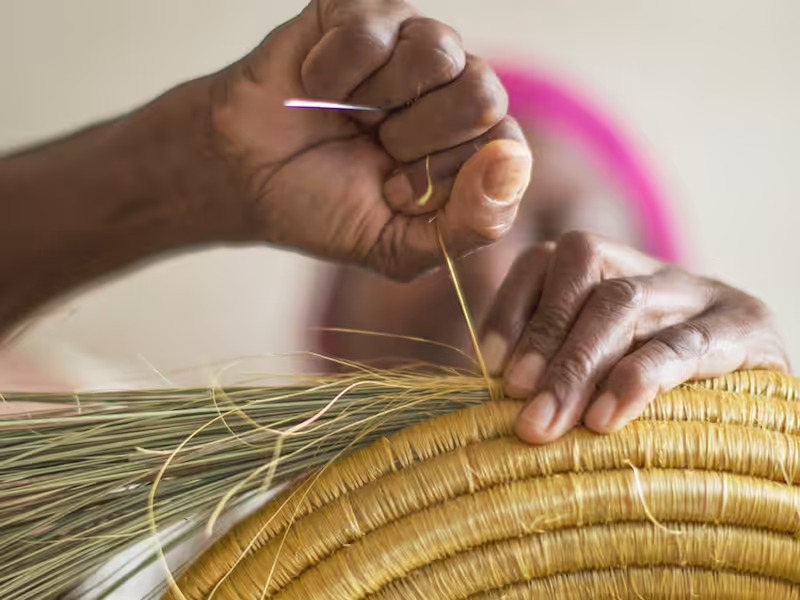
Artisans begin by forming a core foundation using natural materials such as papyrus or banana bark. This core is then meticulously wrapped with thin strands of sisal or sweetgrass, gradually building up the basket in a spiral pattern to create sturdy, rounded baskets.
Plaiting
Flat strips of fibre, such as palm leaves, banana bark, or raffia, are interwoven in a crisscross pattern to form tight, durable mats, trays and other flat-surfaced items.
Braiding
Long, flexible fibres are intricately braided into rope-like strands before being stitched together to shape functional and decorative pieces. This technique adds texture, strength, and durability to the final product.
Materials
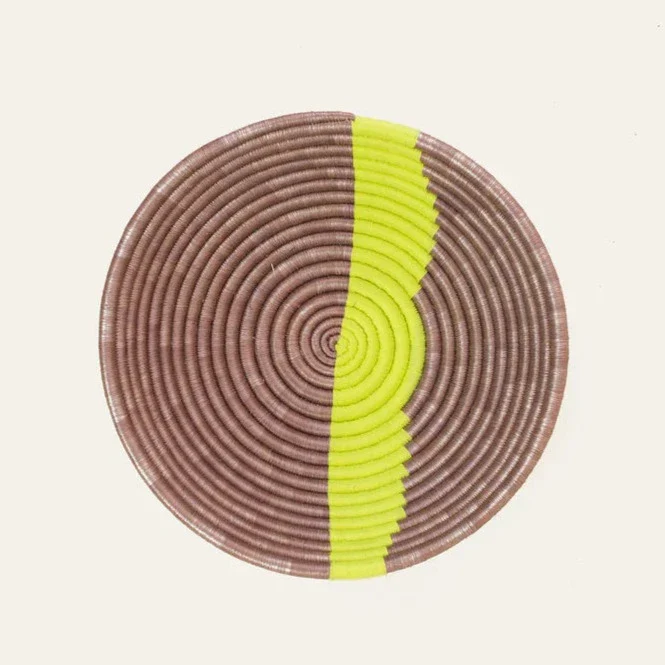
Artisans use a variety of locally sourced and upcycled materials to craft their baskets. Soft, durable sweetgrass and sisal are commonly used for coiled baskets. The inner fibres of raffia palm leaves and banana bark are often dyed with natural pigments and used to create vibrant and intricate patterns. Some artisan groups upcycle food grain sacks, weaving repurposed materials into their designs to reduce waste.