
CRAFTSMANSHIP
Preserving tradition
creating opportunity
Craftsmanship is more than a skill – it is an identity, a livelihood and a connection to heritage. For generations, artisans have safeguarded techniques that tell their stories through textiles, metalwork and other handcrafted traditions. Yet conflict and forced displacement threaten to erase these traditions.
© UNHCR/ J Cendon

Contemporary design, rooted in heritage
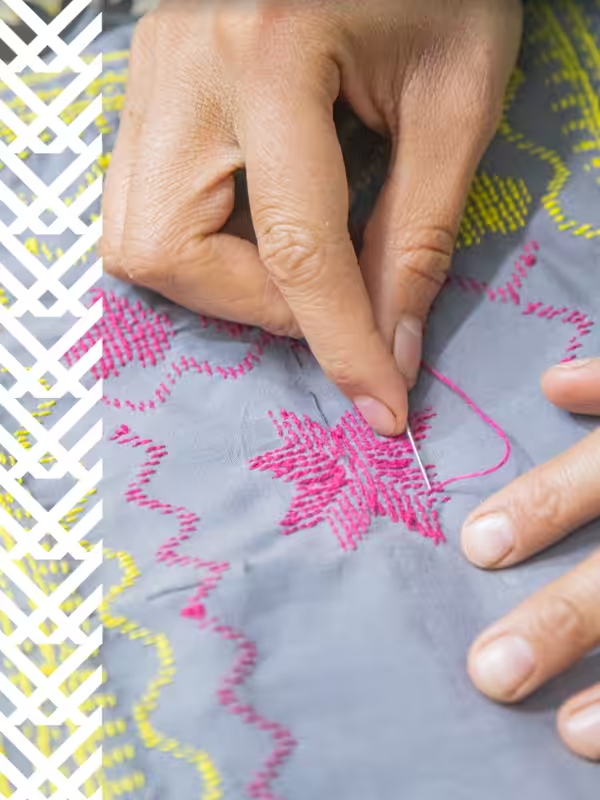
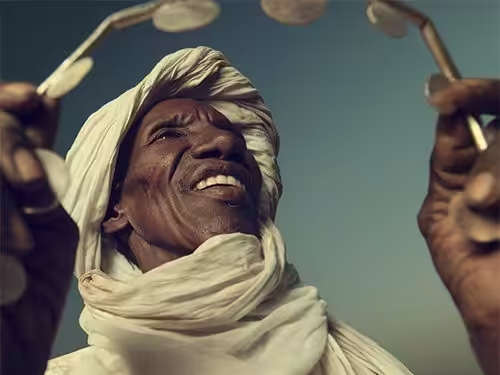
From intricate Tarshumar embroidery practised by Afghan women, to fine Tuareg metalwork of Malian artisans, each MADE51 product is a powerful means of self-expression and cultural preservation. These time-honoured techniques require patience, precision, and deep knowledge passed down through generations. Each stitch, carving or weave reflects the skill and dedication of artisans who have honed their expertise over years of practice.
For refugee artisans, craft is more than a livelihood – it is a lifeline. It offers a way they can provide for their families while keeping cultural traditions alive. MADE51 connects refugee artisans with local social enterprises, equipping them with the resources, training and global market access they need to keep their traditions alive and build a dignified future.
Irreplaceable culture at risk
Forced displacement puts centuries-old craft traditions at risk. When artisans are uprooted from their homes, they often lose the conditions essential to sustaining their practice.
Disruption of generational knowledge
Many crafts rely on skills passed down within families or tight-knit communities. Displacement fractures these apprenticeship structures, leaving younger generations without mentors to continue their heritage.
Loss of essential materials
The displacement that refugees experience disrupts artisanal traditions that rely on locally sourced materials—natural dyes, and specific types of wood, clay or wool. Many refugees find themselves in refugee camps or unfamiliar environments where these resources are unavailable, making it difficult to continue their craft.
Prioritising survival over arts
In refugee settings, skilled people are often forced to prioritise survival, leaving little time or opportunity to create. Without access to stable markets and facing legal and economic limitations due to their refugee status, their ability to make a living from their skills diminishes.
Pressures of cultural assimilation
In unfamiliar surroundings, artisans struggle to see the value of their craft and may feel pressure to abandon traditional practices in favour of the customs and livelihoods of their new host country, leading to the erosion of unique cultural identities.
© UNHCR / 6M Productions
Discover refugee craftsmanship
Discover the heritage, techniques, and personal stories behind the refugee-made crafts in the MADE51 collection.
Spotlight:
Spotlight:
Spotlight:
Spotlight:
Spotlight:
Spotlight:
© UNHCR/Pedro Gomes
Heritage skills
Basketry
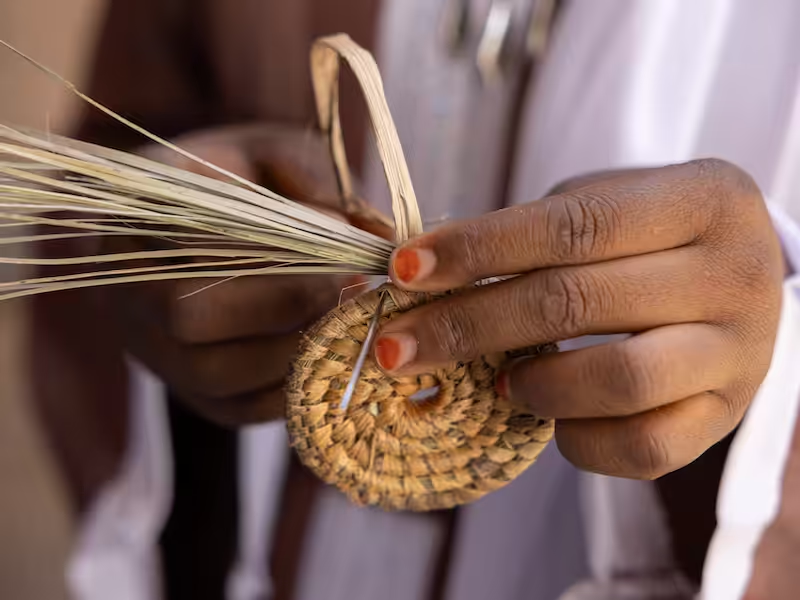
Refugee artisans practice time-honoured weaving techniques using natural fibres like sisal, banana leaves, sweet grasses, and reeds. Many Burundian weavers specialise in coiling, where fibres are wrapped around bundled grass to form sturdy, sculptural pieces with intricate patterns. The tightness of the coils, material selection, and precise hand movements determine the durability and design of each basket.
Embroidery
Refugee artisans use embroidery techniques passed down through generations, applying precise stitches to textiles, clothing, home decor, and accessories. Afghan artisans use embroidery styles particular to their home region, while Syrian artisans specialise in cross-stitch, creating geometric patterns with exacting symmetry. Each stitch requires careful tension and placement, transforming fabric into richly textured, symbolic designs.
Metalwork
Skilled metalworkers use techniques such as casting, forging, and hammering to shape and engrave jewellery, home decor, and ornaments. Tuareg artisans engrave, etch, and hammer detailed patterns into silver, brass, and copper, creating lightweight yet durable pieces. Using heat, pressure, and specialised hand tools, they craft earrings, pendants, keychains, and bowls, often incorporating intricate geometric motifs rooted in tradition.
Leatherwork
Refugee artisans tan, cut, and stitch leather using methods refined over centuries. Traditional vegetable tanning enhances durability while embossing and hand-stitching add texture and character. Tuareg artisans are known for intricate geometric embossing, while others apply precise perforation and layering techniques to create detailed patterns in leather goods.
Weaving
Backstrap loom weaving, practised by refugee artisans from Myanmar, uses a loom anchored to the body, requiring precise tension control to create intricate, tightly woven fabrics. This method allows for detailed patterns with subtle variations in texture and colour. Sadu weaving, a traditional form of handloom weaving practised by Syrian artisans, is done on a ground loom, where the weaver sits on the floor and manually manipulates the warp and weft threads. Historically used by Bedouins, Sadu weaving is known for its bold patterns and durable structure, making it well-suited for everyday textiles.
Crochet
Refugee artisans use crochet techniques to create detailed, lace-like patterns with interlocking loops of yarn or thread. The tension of each loop affects the final shape, requiring precise hand control. Afghan and Syrian artisans specialise in fine cotton crochet to produce delicate lacework and intricate decorative trims, as well as Zari thread jewellery.
Silk Screen Printing
Using handmade stencils and dyes, artisans apply bold patterns to fabrics, clothing, tote bags and wall hangings. This technique allows makers to reproduce traditional motifs while adapting them for contemporary markets. The process requires steady hands and a keen eye for pattern consistency, ensuring that each design is both culturally meaningful and commercially appealing.
Hand Dye
Natural dyeing methods bring rich colours and organic patterns to textiles, scarves, table linens and clothing. These handcrafted dyes create unique, one-of-a-kind designs that celebrate cultural traditions. Some artisans use traditional tie and dye techniques, carefully folding, twisting, or binding fabric before dyeing to produce intricate, rhythmic patterns. Whenever possible, the dyes are derived from locally sourced plants, roots and minerals, making each piece a reflection of the artisan’s environment.
Woodworking
Artisans carve and shape utensils, jewellery and decorative pieces, using age-old techniques to craft functional and artistic items from sustainable materials. Congolese artisans carry forward their rich tradition of wood carving, while other refugee artisans adapt their skills to available resources. Our collection includes coconuts handcrafted into bowls by refugees in Ghana, and doves carved from fallen branches of Jacaranda trees in Kenya.
Upcycling
Refugees repurpose discarded materials—such as textiles, metals and plastics—into handcrafted goods using textile patchwork, metal shaping and weaving techniques. Fabric scraps are layered for durability, metals are cut, manipulated and embossed for decoration, and plastic is braided and coiled into sturdy forms and basketry. This sustainable approach gives new life to materials while preserving artisanal skills.
Wire & bead work
Refugee artisans meticulously thread beads and shape wire to intricate patterns, often inspired by nature and traditional symbols. Precision is key, as each bead must be placed with accuracy to create balanced designs that evolve into jewellery, decorative sculptures and festive ornaments. Sudanese artisans make beaded crochet pieces by carefully threading and securing beads within tightly crocheted loops to craft jewellery and accessories.
Fabric Manipulation
By folding, pleating, quilting or appliquéing fabrics, artisans create textured cushions, bags, clothing details and home textiles. These techniques add depth and artistry to handmade fabric goods, improving their function and design.