On World Refugee Day, we take a moment to honour the strength, challenges and contributions of people forced to flee their homes all around the world.
This year carries particular significance. In 2026, UNHCR marks the 75th anniversary of the 1951 Refugee Convention — the landmark international agreement that defines who a refugee is and outlines the rights, protections and opportunities people are entitled to when forced to flee.
Seventy-five years later, those principles remain as important as ever.
At a time when conflict, displacement and uncertainty continue to affect millions of people around the world, the anniversary serves as a reminder that international protection frameworks exist not only for refugees, but for all of us.
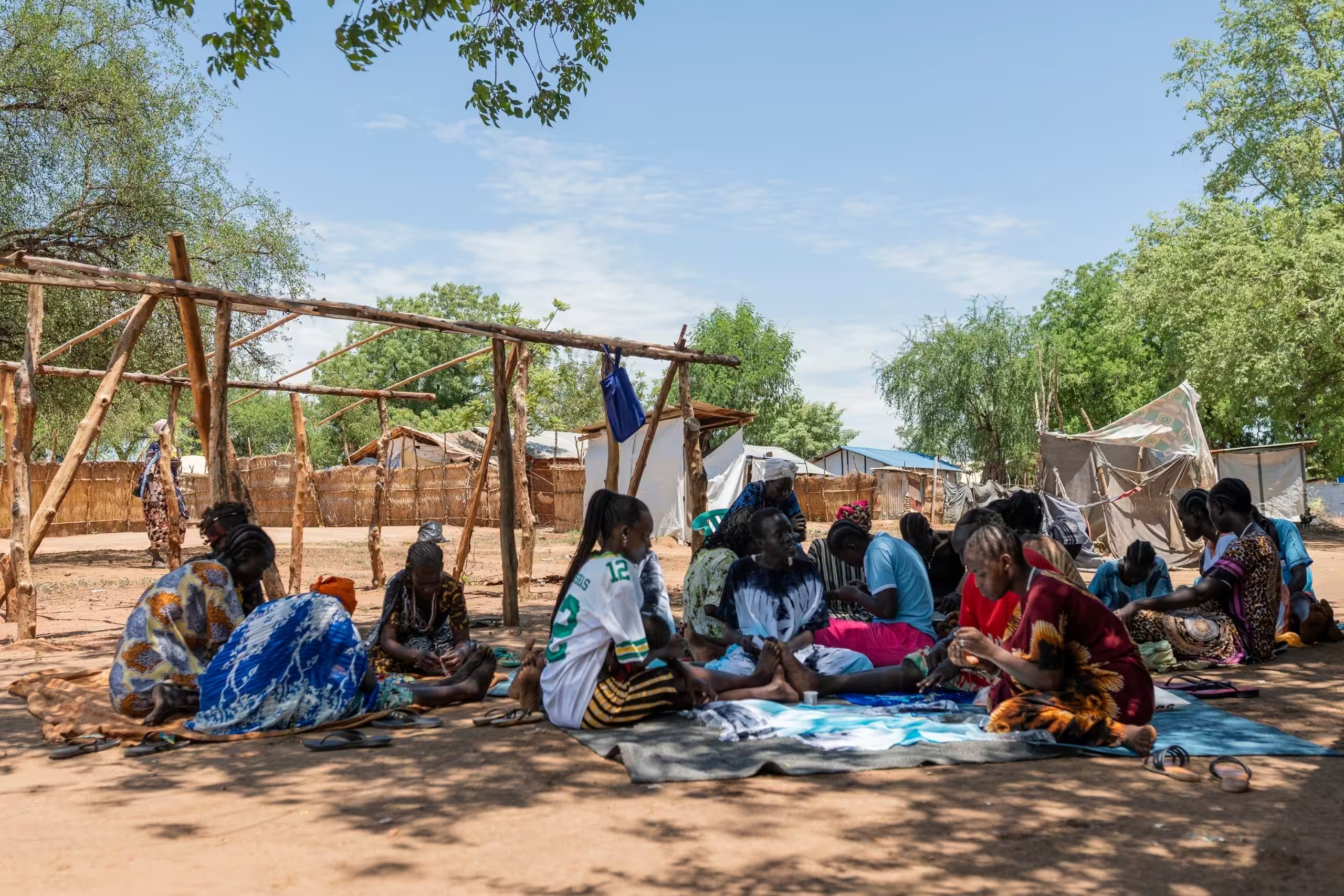
For MADE51, this moment raises an opportunity to highlight a key aspect of our work. In many ways, MADE51 is the Refugee Convention in action. The “51” in our name references the 1951 Refugee Convention itself, whilst MADE stands for Market Access, Design and Empowerment. Created by UNHCR, MADE51 connects refugee artisans with global markets, creating opportunities for dignified work, income generation and cultural preservation through craft.
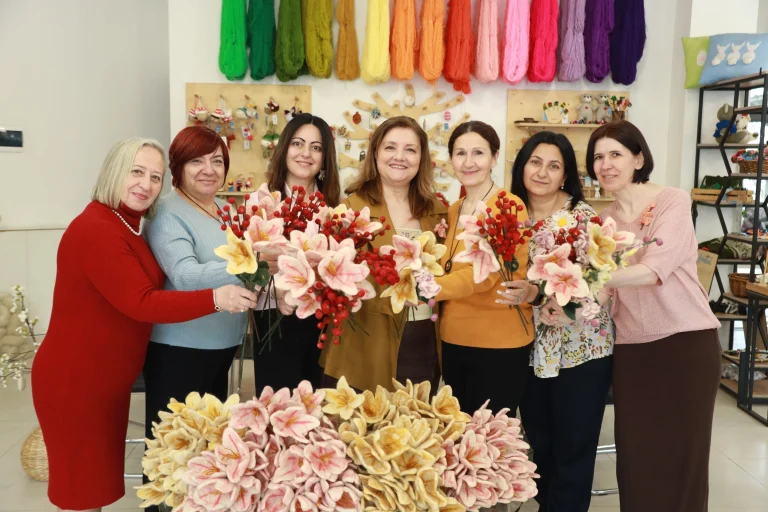
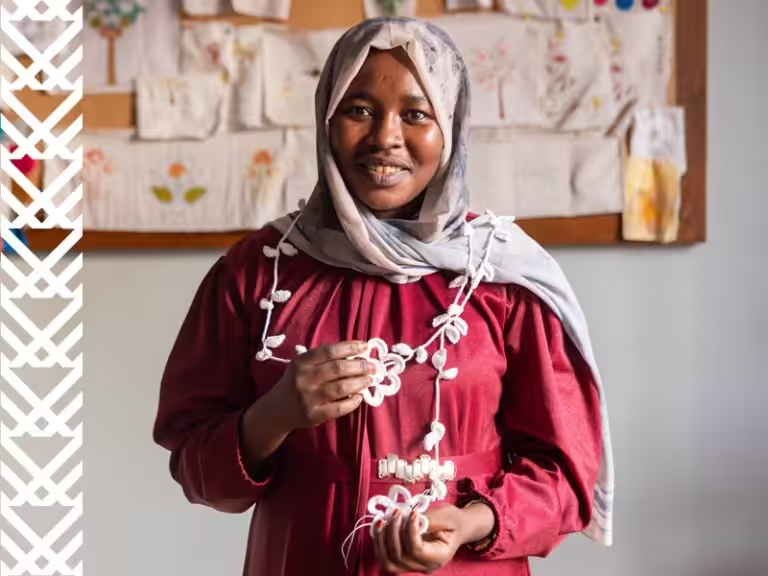
Through MADE51, refugee artisans create refugee-made jewellery, accessories, home décor and gifts that are sold around the world. Every purchase helps create livelihoods for people forced to flee while preserving traditional craft skills and cultural heritage. For many, their craft provides a sense of identity, community and continuity despite displacement.
This World Refugee Day, UNHCR is encouraging people everywhere to take three simple actions:
1) Discover the power of the Refugee Convention
2) Start conversations about refugees with your loved ones, and
3) Shop MADE51
That final action highlights that behind every MADE51 product is a story of survival and determination, a livelihood for a family, and a cultural narrative that must be carried forth.
Refugee Artisans Craft the Peace Collection for World Refugee Day
Each year, MADE51’s Peace Collection is reintroduced for World Refugee Day, with the addition of new designs.
Created by artisans displaced from Afghanistan, DR Congo, Eritrea, Ethiopia, Mali, South Sudan, Sudan and Syria, the Peace Collection is a reminder of the urgent need for peace today, particularly in the context of global displacement.
This year’s new additions to the range include the Peace Bookmark, crafted by Syrian refugees in Lebanon.
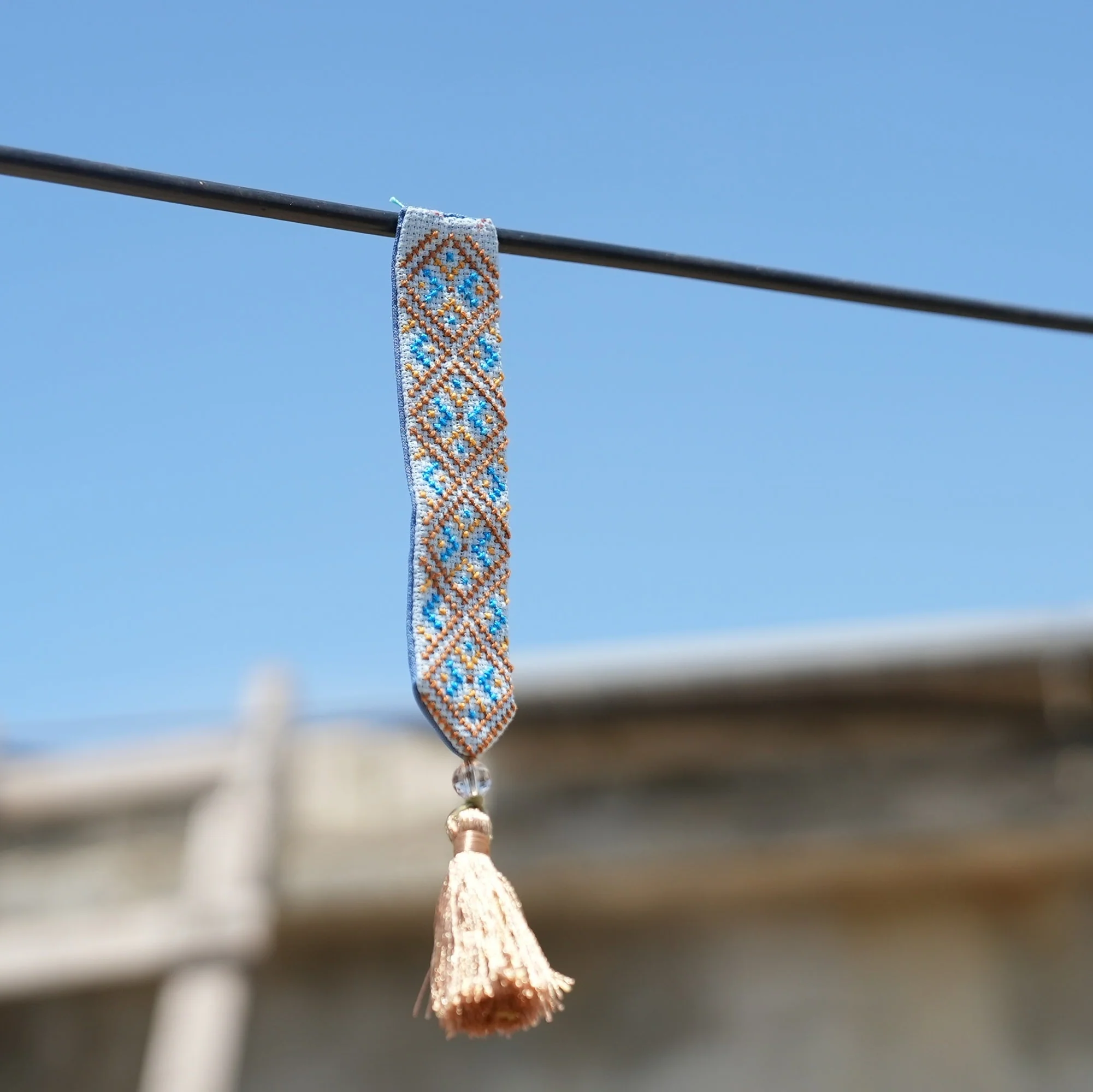
In March 2026, a new wave of bombings began in Lebanon and has continued to this day, displacing more than 1 million people. Among those affected are many Syrian refugees already living in displacement, including the artisans who craft the Peace Bookmark.
Unable to return to Syria due to uncertainty, hyperinflation and a lack of infrastructure after years of conflict, many Syrian refugees remain in Lebanon. UNHCR estimates that 90% of Syria’s population lives in poverty, with 60% living in extreme poverty. Faced with renewed violence, many MADE51 artisans are now staying with relatives in less affected areas of Lebanon.
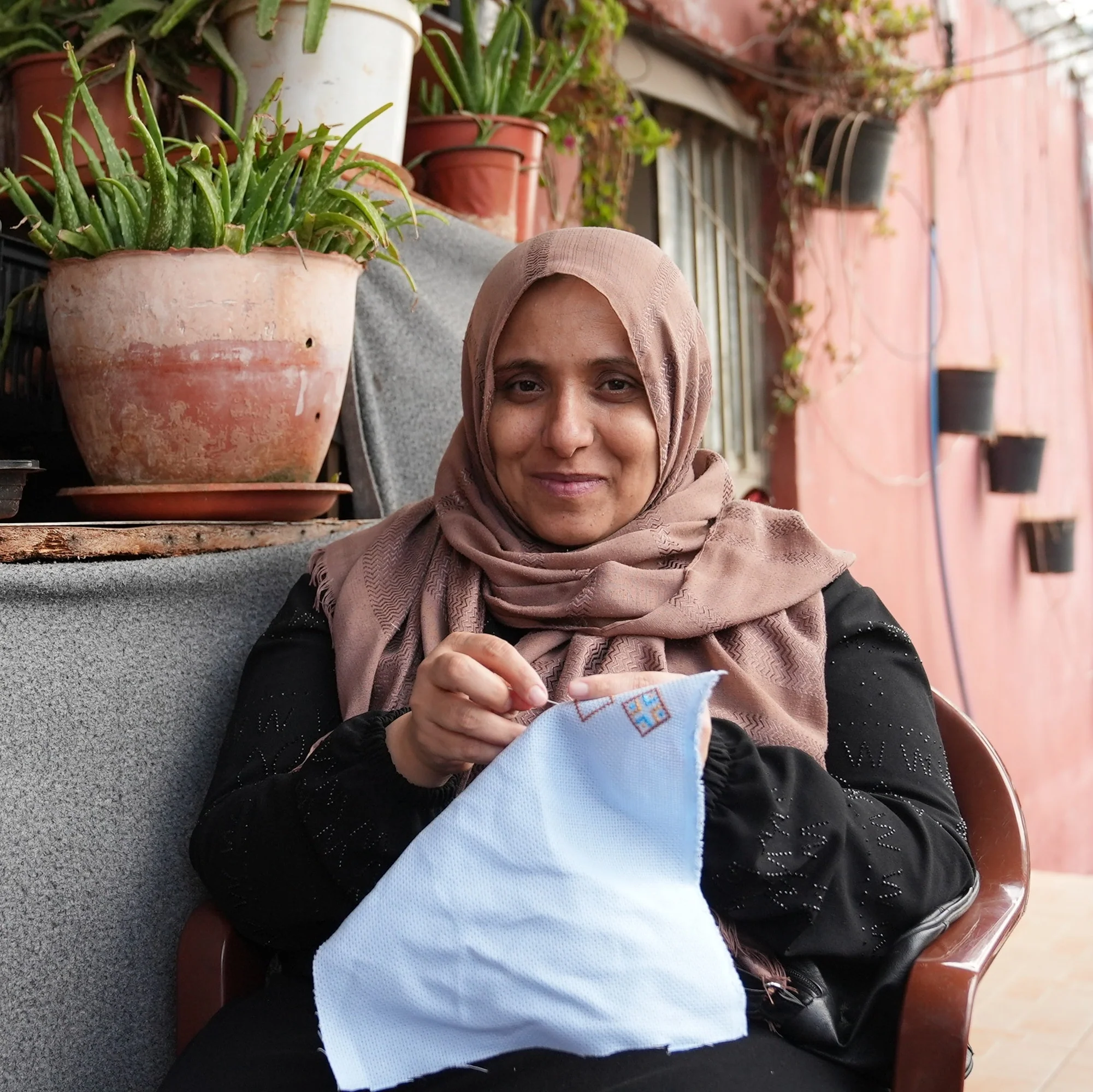
Roula, Founder of Rim N Roll, a MADE51 social enterprise partner in Beirut, describes the April 8 attack in which Israel struck more than 100 sites across the country in its largest coordinated assault to date.
“It was really terrifying. At 6 o’clock, we heard something really strong. They had hit a building about 1km away. The building fell. I was on the phone to my daughter and I heard the ambulances and people shouting, and saw the smoke. I spent the next week sleeping in the corridor of my home, scared. I stayed home the whole week. It was traumatising.”
Waleed, Co-Founder of MADE51 social enterprise partner Waste Studios which works on the Peace Card Holder, described the scale of the displacement:
“It was like a tsunami. I’ve never seen anything like it. People were sleeping in the trunks of cars and covering themselves with whatever they had. So many people were sitting in cars, on the streets, and in a parking lot near our workshop. We gave out large tarps to people in need. The artisans were safe. I offered that they come to live at the workshop, but they preferred to stay at home even though they were living close to where the bombing was happening. ”
UNHCR remains on the ground, providing emergency relief items and psychological support to people forced to flee their homes and cope with the trauma of repeated displacement. But above all, what they need is peace.
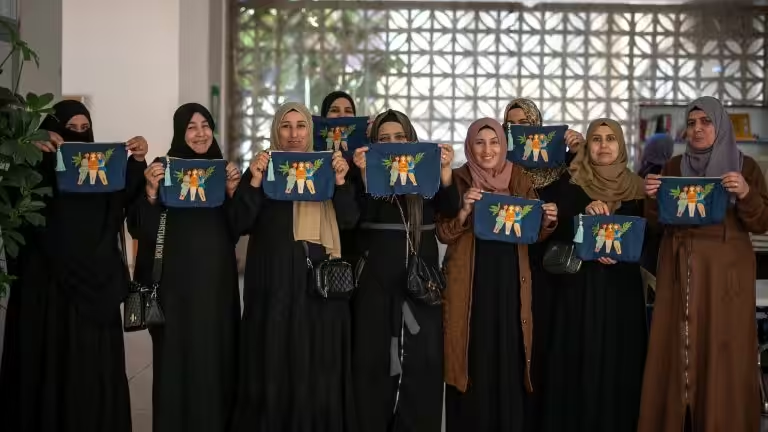
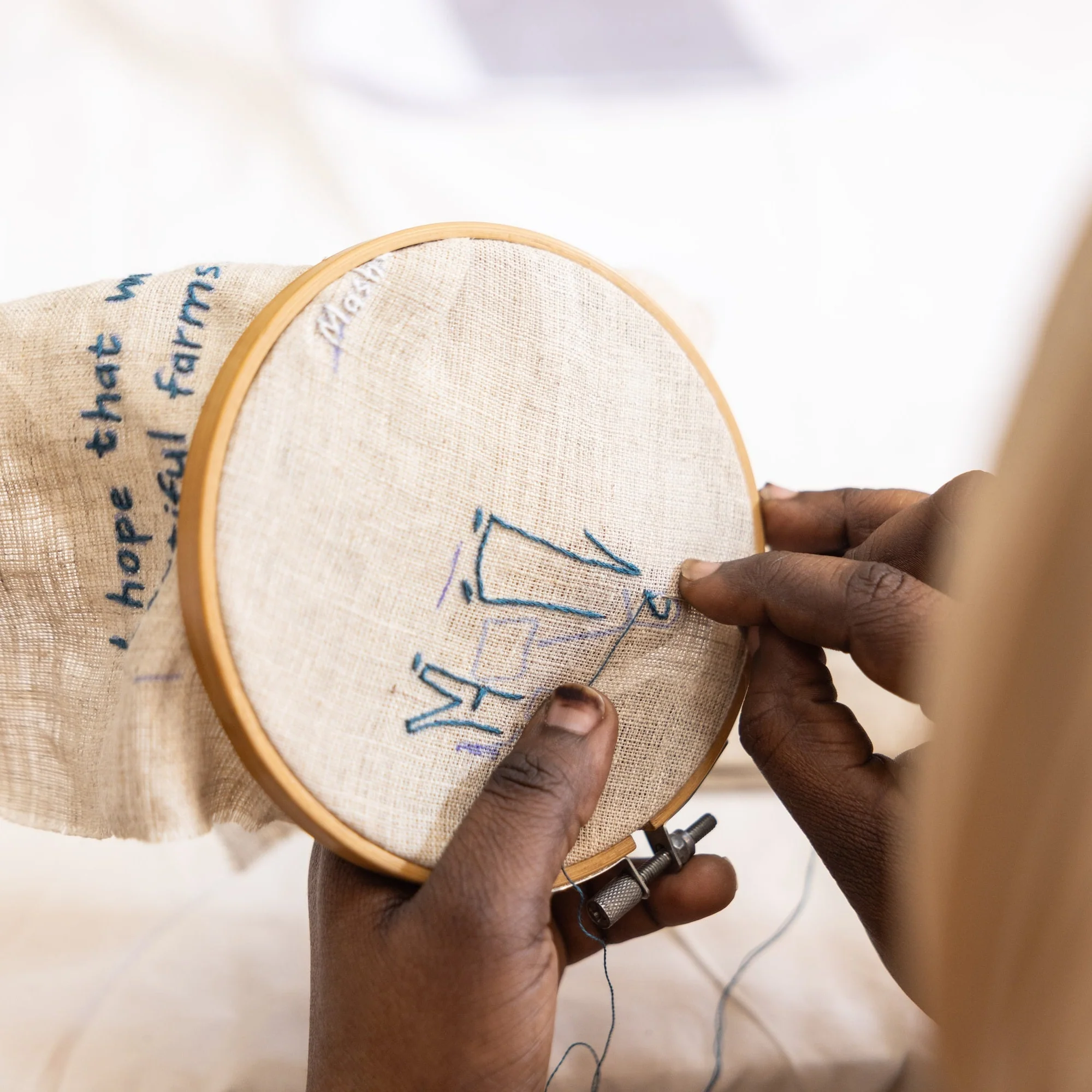
MADE51 refugee artisans call for peace in each stitch they apply to the Peace Collection. The Peace Pencil Case, crafted by refugees living in Egypt, depicts a quote by Mashaer, a Sudanese refugee, whose words “I hope that we can return to our beautiful farms and green gardens” are embroidered onto the pencil case.
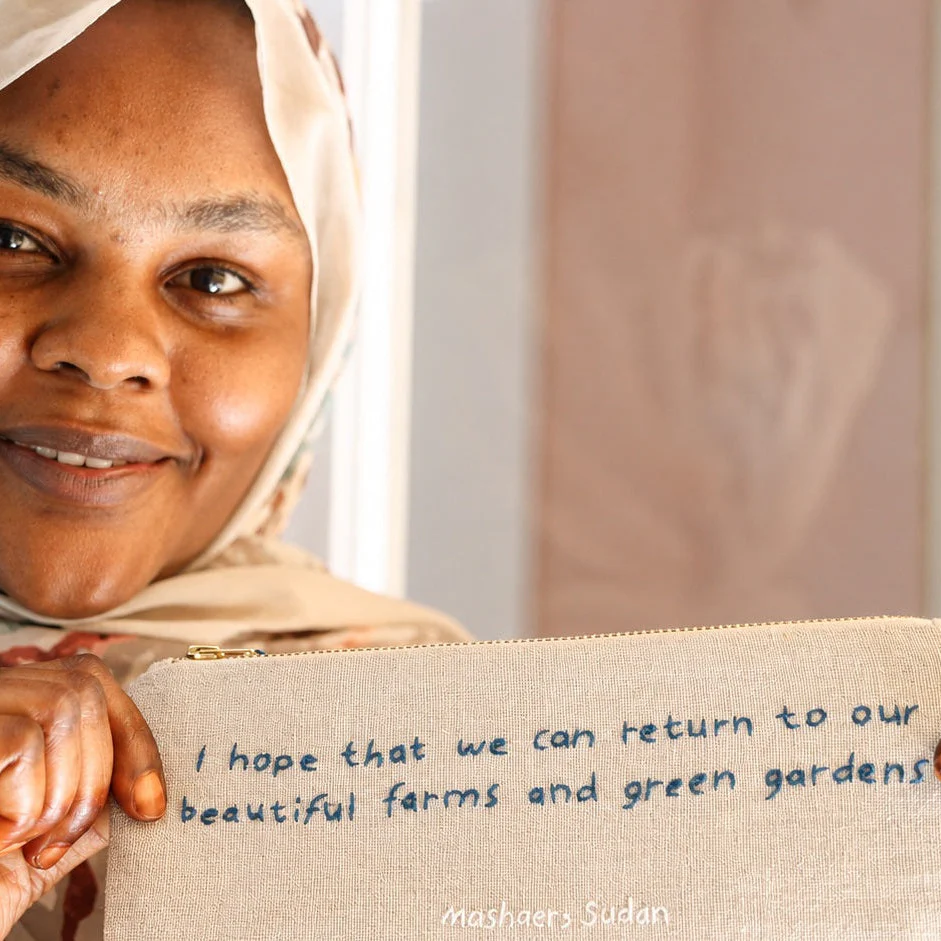
For refugee artisans like Mashaer, the need for peace is not an abstract concept. It is woven through daily life: in memories of, and longing for, homes left behind; concern for family members still affected by conflict; and hopes for a future with safety, stability and opportunity.
Many have experienced the loss of home, stability and community firsthand. Through craft, they carry forward their wish for peace, solidarity and shared humanity.
At the heart of the Peace Collection is the With Refugees Bracelet.
Over the past year, the bracelet has become a globally recognised gesture of solidarity with people forced to flee. Worn by UNHCR Goodwill Ambassadors including Cate Blanchett and Theo James, it has helped bring refugee-made craftsmanship to audiences around the world.
This year, MADE51 builds on that momentum with the launch of new Stackable Bracelets.
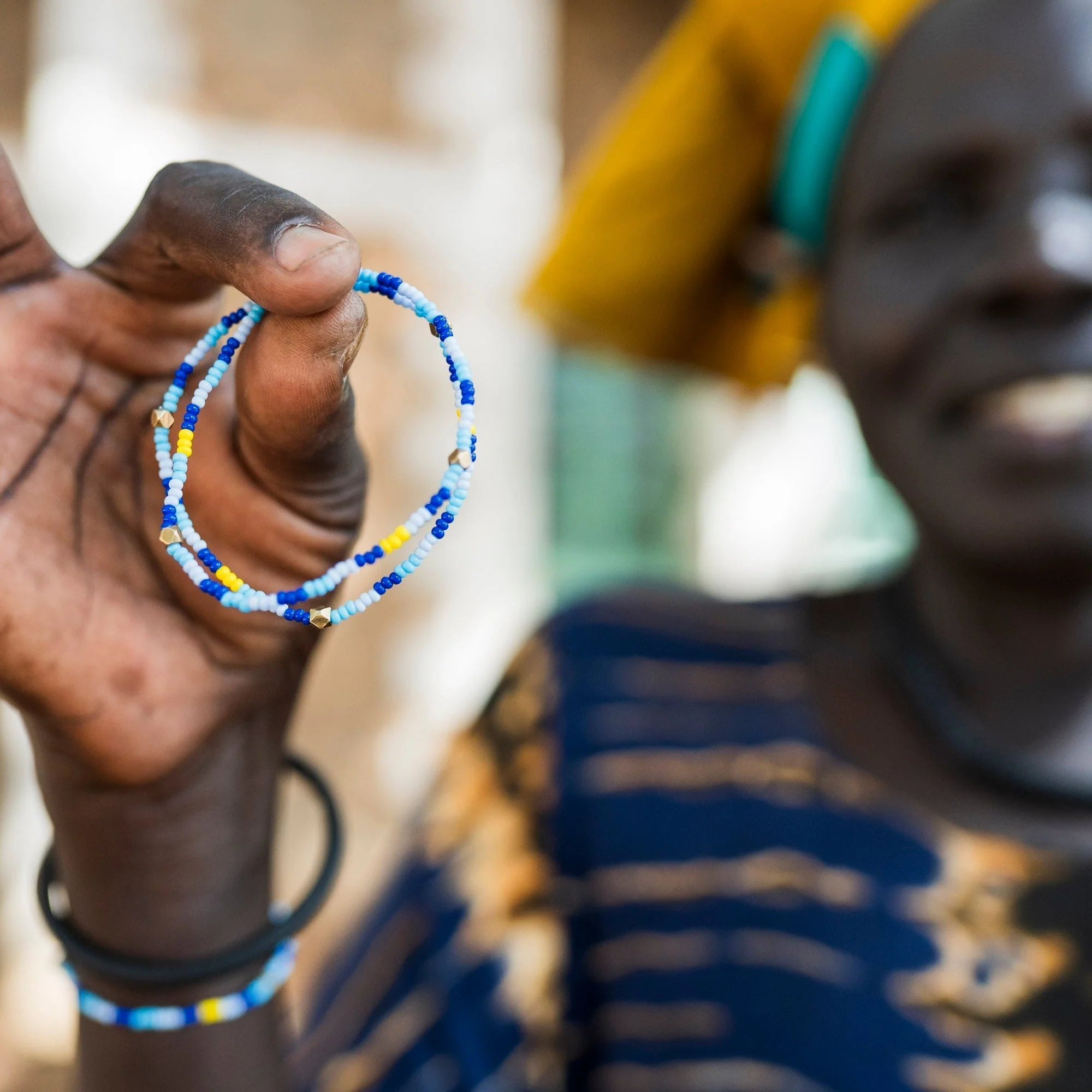
Designed to be worn with your With Refugees Bracelet, the Stackables feature UNHCR’s signature blue tones and were created in displacement by artisans in South Sudan.
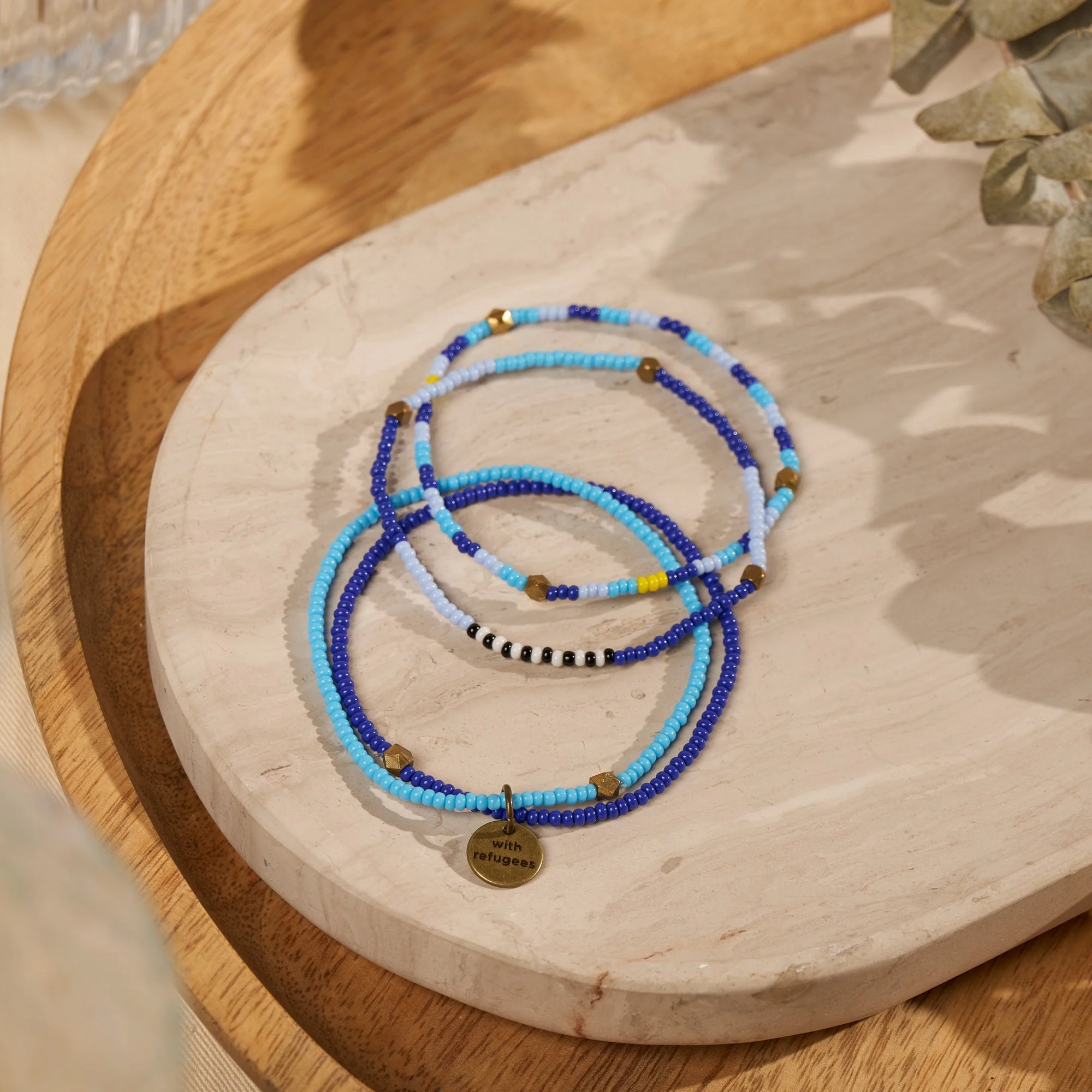
Together, they are a visible symbol of solidarity — something people can wear every day as a reminder that until everyone is safe, we stand with refugees.
The Refugee Artisans Behind the Stackable Bracelets
The Stackable Bracelets bring together two designs developed by artisans Lucia and Jacky.
Lucia arrived in Juba after fleeing conflict in Malakal in 2013. After spending time in a camp, she eventually joined Roots South Sudan, where she learned new techniques including crochet and wire beadwork.
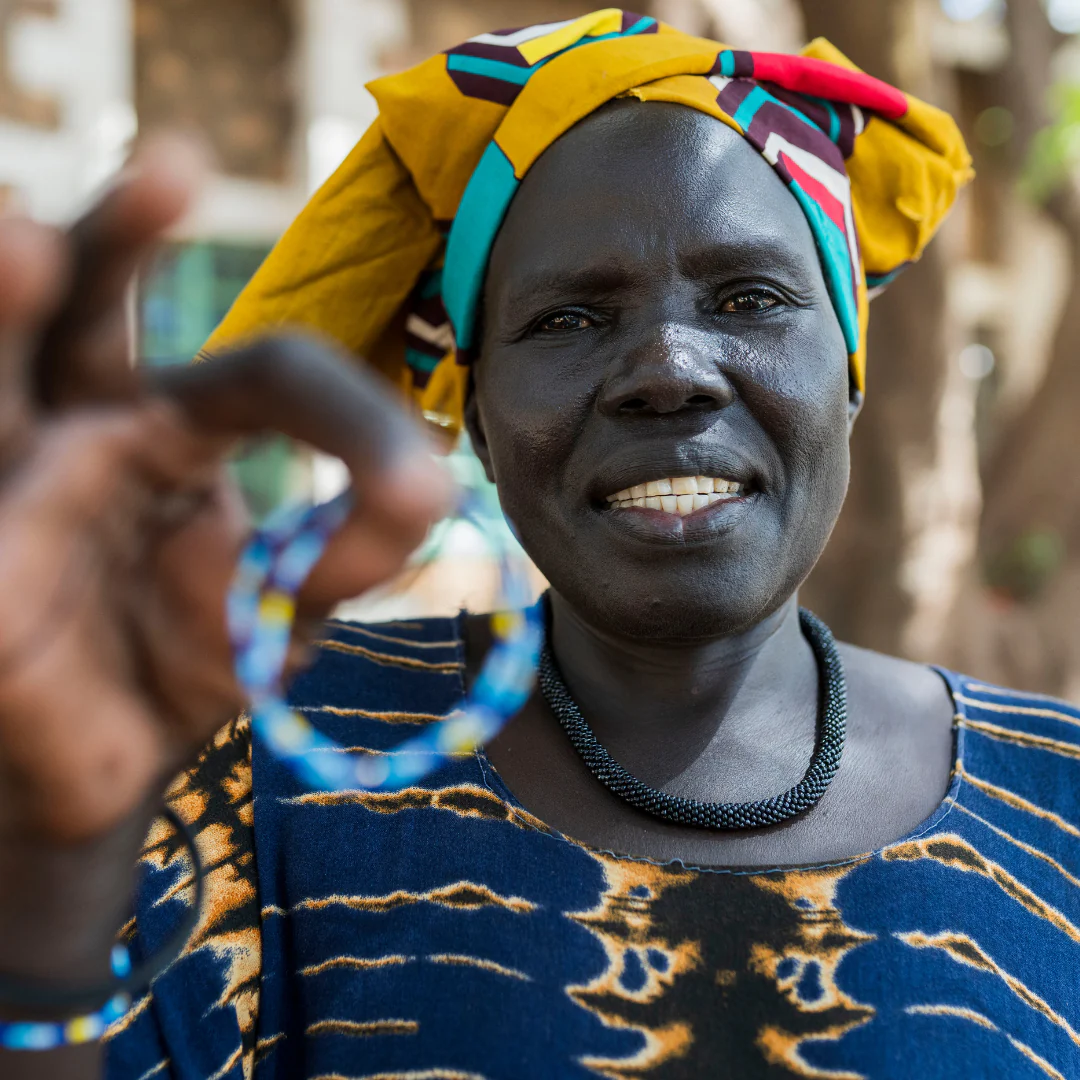
Her design for the Stackable Bracelets emerged through experimentation.
“When I saw the colours in the other designs, they reminded me of the colours we use in our traditional Ungara beadwork,” Lucia explains. “I wanted to try sets of three colours to see if they could work together.”
She began combining beads on a cord, testing different arrangements until a new design emerged.
“I created something, and I never thought it would turn out this well,” she says. “By you wearing it, people came to know my name.”
The second bracelet in the set was designed by Jacky, a host community artisan, university student and mother of two. Through her work with MADE51 social enterprise partner Roots, Jacky has been able to support both her children’s education and her own studies. Working alongside displaced women in South Sudan, she reflects the social cohesion and shared economic opportunities that can emerge when refugees and host communities work together — a core principle of the MADE51 model.
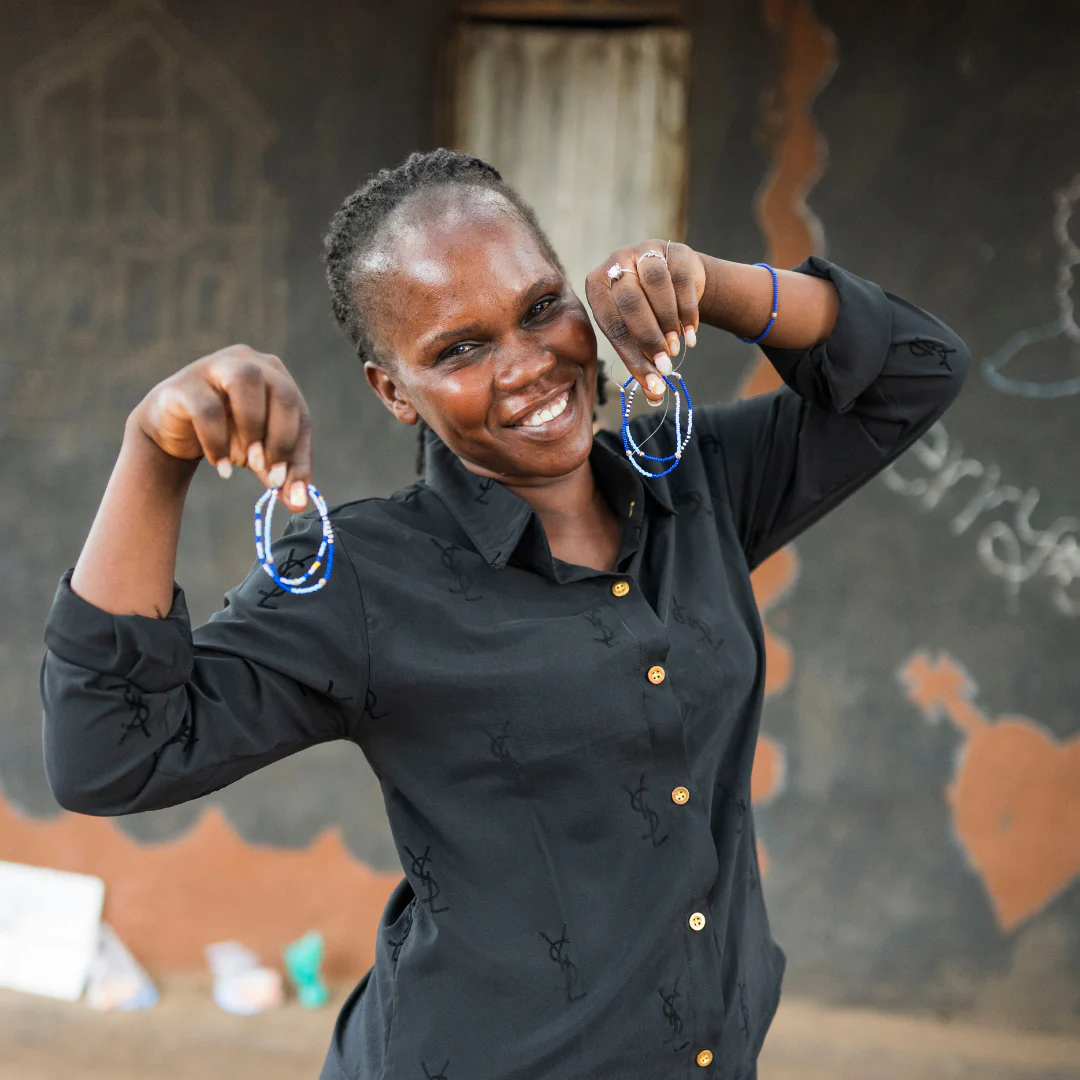
Jacky dreams of one day building a home through the income she earns from beadwork and being able to tell her children that her craft helped create a better future for their family.
“The best way to help someone is by giving them work,” she says. “We are in need, and if there is more work, we are willing to work.”
How the Stackable Bracelets Create Income for 400 Women in South Sudan
The impact of the Stackable Bracelets extends far beyond the two women who designed them.
The bracelets are handcrafted by refugee women from Ethiopia and Sudan, alongside internally displaced South Sudanese women, living in South Sudan.
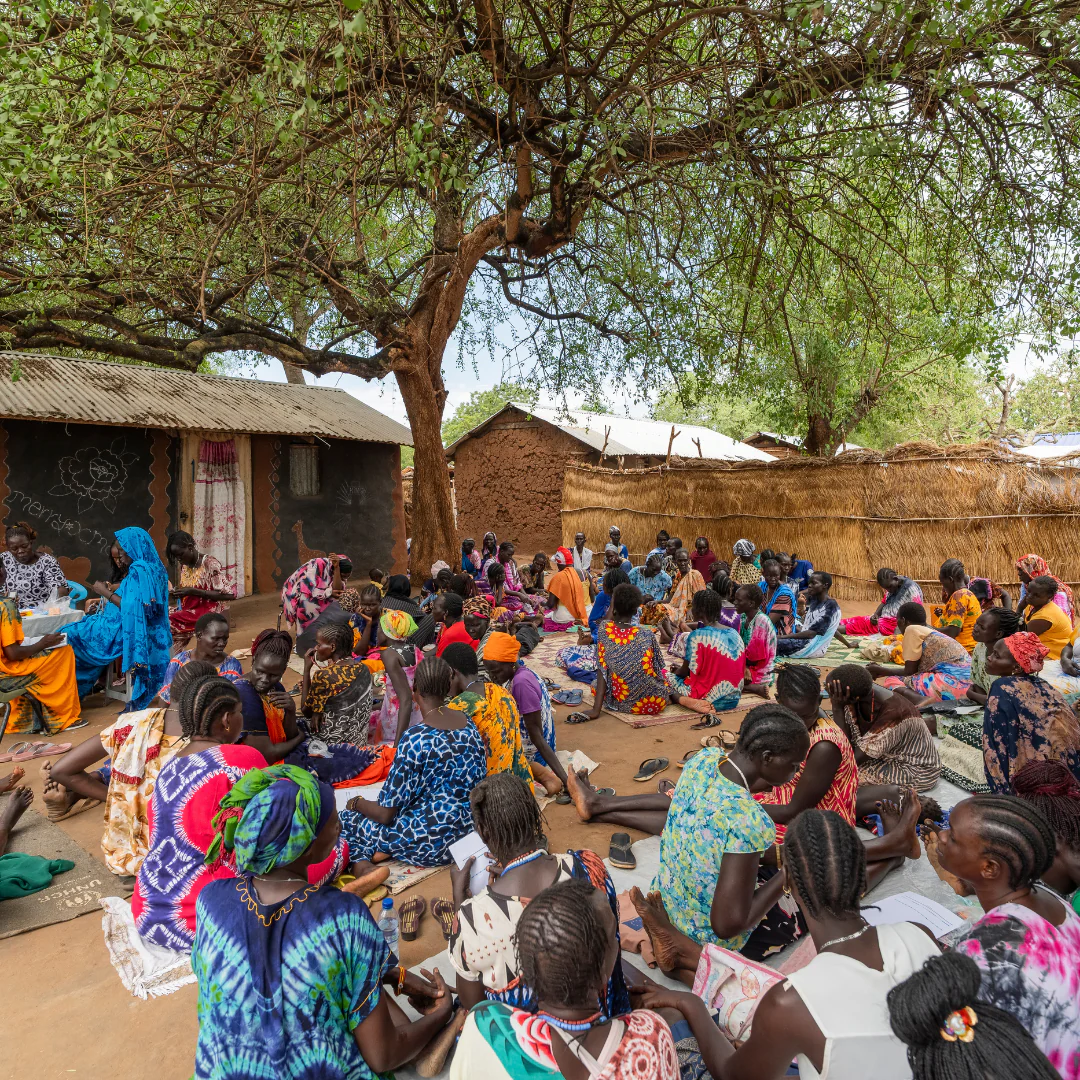
One of those artisans is Abuy, a refugee from Ethiopia.
She arrived in South Sudan as a child. Years later, after seeing her neighbours creating jewellery through beadwork, she asked to join the MADE51 artisan group. She had never worked with beads before, but learned the craft and now produces a range of designs.
Today, beadwork helps her buy food, clothing, cooking oil and other necessities for her family.
“Everything is expensive, and it is difficult to earn money. That is why this work is important. With the income I make from beadwork, I can buy flour, oil, clothes and other necessities.”
Like many artisans, she hopes there will be more opportunities for women to participate.
“I hope you will bring more work for us to do, so that the project can grow and reach more people.”
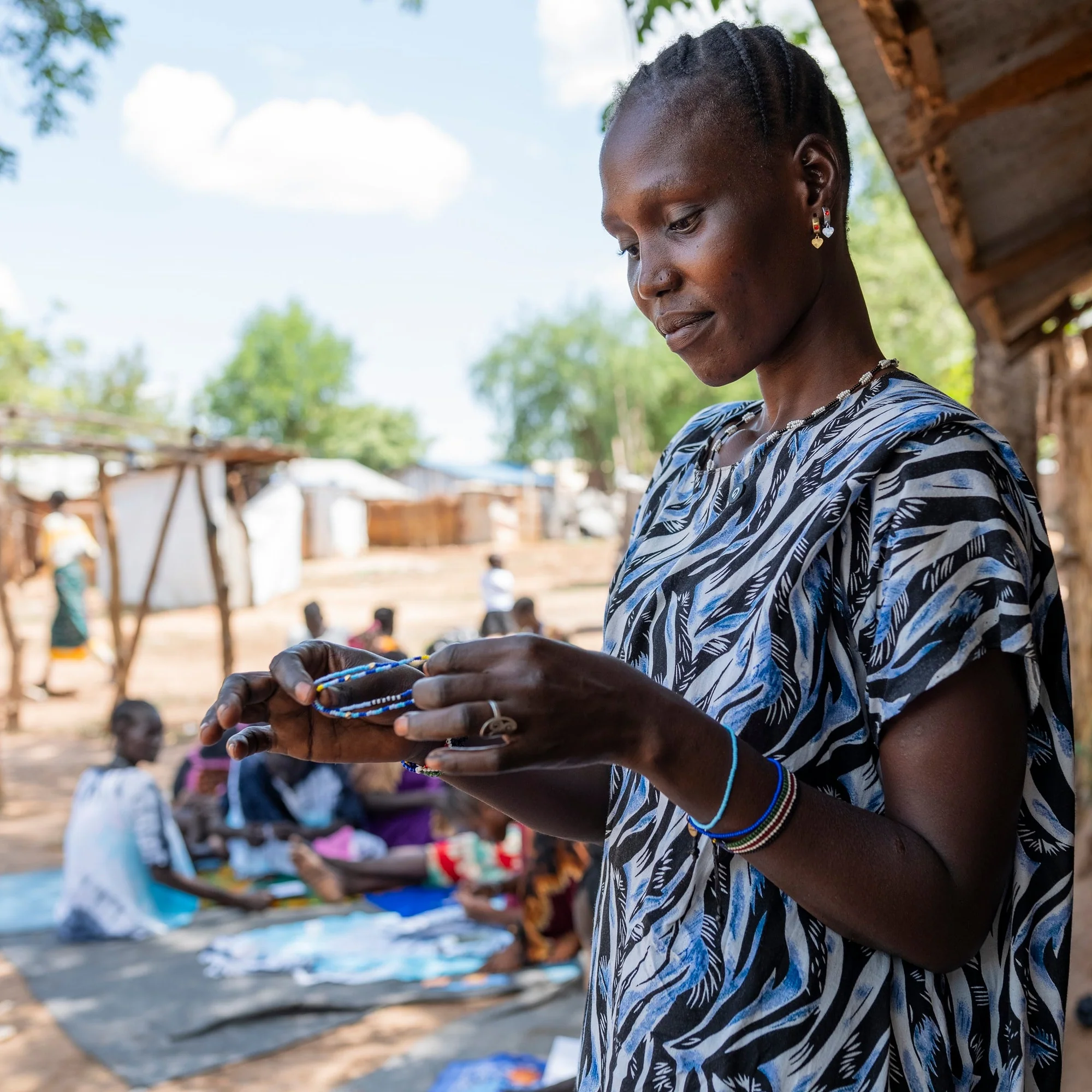
Across South Sudan, approximately 400 women are now producing the Stackable Bracelets.
Every one of them is part of a supply chain based on craftsmanship, collaboration and protection.
Many are caregivers and primary income earners. For them, craft helps provide food, education and stability for their families while preserving skills and traditions carried with them from their countries.
Wear your solidarity this World Refugee Day
The With Refugees Bracelet and Stackable Bracelets represent the power of work, creativity and connection.
They carry the stories of women like Lucia, Jacky and Abuy — women whose skills have travelled further than they ever imagined, reaching people around the world through something they dreamed up in their minds, and they made with their hands.
This World Refugee Day, as UNHCR marks 75 years of the Refugee Convention, we invite you to stand with refugees by:
1. Learning about the 1951 Refugee Convention, and how it was created to protect you, me, all of us.
2. Start a gentle conversation with your loved ones
3. Help bring refugee-made products into the world by shopping MADE51 and supporting refugee artisans to earn an income through their craft.
Because until everyone is safe, we stand with refugees.